Lucknow Railway Strike 1979: workers protested harsh conditions, demanded fair wages, unity, resilience, solidarity, historic struggle, disruption, empowerment, sacrifice.
Lucknow Railway Strike 1979
As far as railway movements are concerned, in November 1979, a significant incident occurred in North Eastern Railway involving Shiv Gopal Mishra. Although there had been several small and large protests before — trains were halted, demonstrations were held, officials were gheraoed (surrounded), and confrontations took place
Lucknow Railway Strike Sparked by RPF Brutality
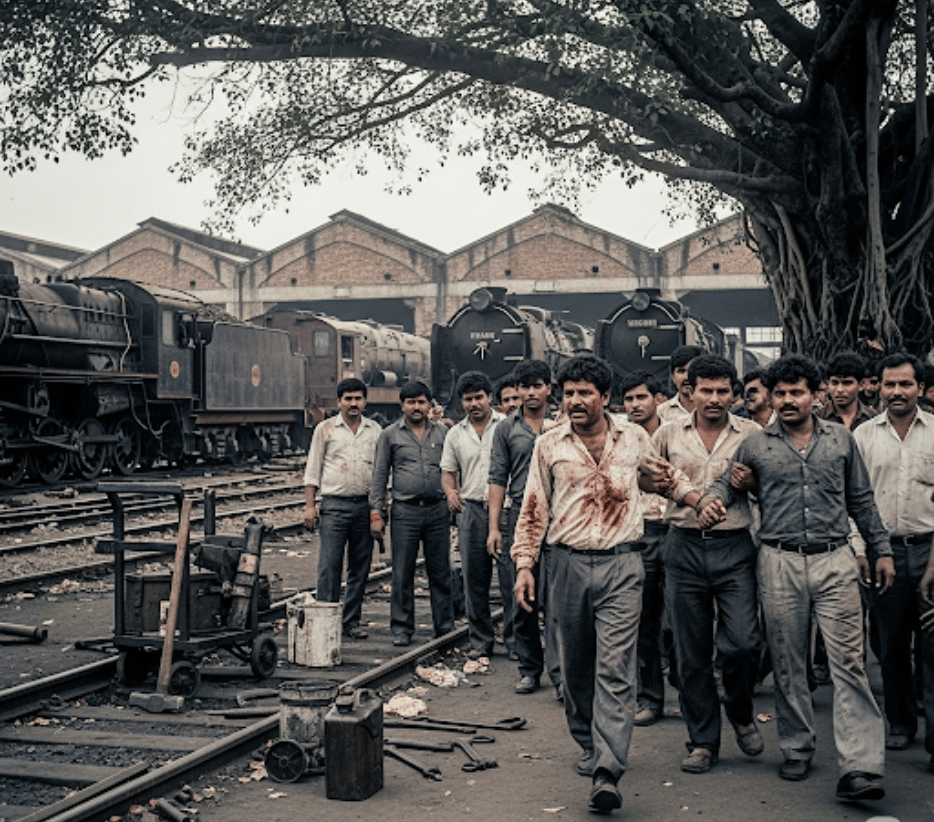
A major movement began when RPF personnel brutally beat up some foremen, employees, and officials in a loco shed of the North Eastern Railway.
There was a lot of bloodshed there. The injured employees, their clothes soaked in blood, came to the Northern Railway loco shed.
When Mishra Ji Roar and Declaring Protest
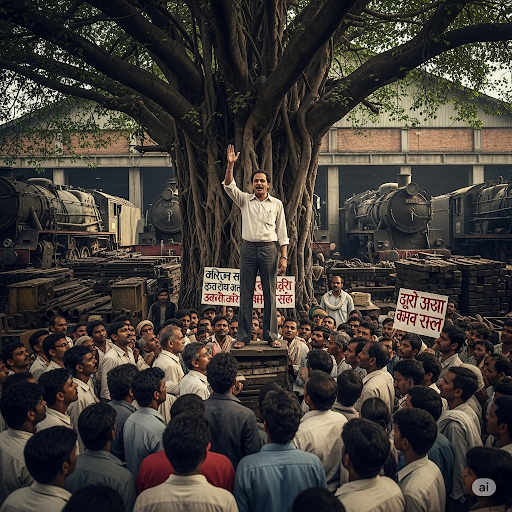
The local leaders called Shiv Gopal Mishra, who at that time was the Assistant Divisional Secretary of the union, and informed him about the incident. They asked, “NE Railway staff has already stopped work — what should we do now?” Shiv Gopal Mishra replied, “Gather everyone — I’m coming.”
At that time, there was a tree under which all workers usually assembled. Mishra ji told them, “If work is already halted there, then you should stop work too. I’m on my way.” By the time he reached, the workers had already ceased operations. The loco shed had come to a complete halt, and all the employees had gathered.
With high emotions, Mishra ji declared, “If the RPF Commander has shown such brutality, we will not resume work until action is taken against him. As long as the NE Railway shed is shut, the Northern Railway shed will also remain closed.”
Engines Halted During Lucknow Railway Strike
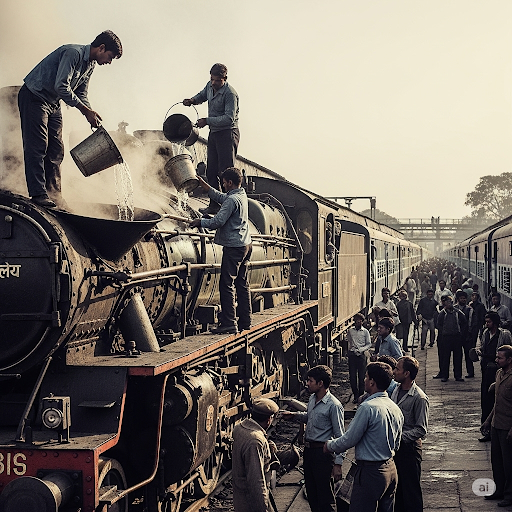
Saying this, Mishra ji left. At that time, he didn’t know the technical procedure for stopping work. The employees there poured water into the engine boilers and shut them down, causing the engines to cool. In winter, once an engine cools down, it takes two to three days to restart. As a result, all work came to a standstill. Trains stood idle at stations due to the unavailability of engines, completely halting operations.
It turned into a massive protest.
Leadership Tested in Lucknow Railway Strike
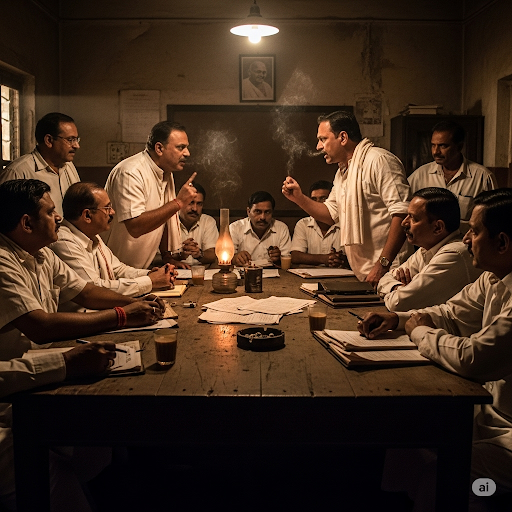
That evening, a Standing Committee meeting was called where Shiv Gopal Mishra was strongly reprimanded by senior leaders: “Who are you to make such a decision on your own?”
Mishra ji responded:
“How was I supposed to know? I saw workers bleeding and enraged. I felt that when a protest is happening right next door, how can we remain silent? That’s why we halted work.”
Many were upset, but some said, “What’s done is done — now we must resolve it.”
Administration Faces Heat in Lucknow Railway Strike
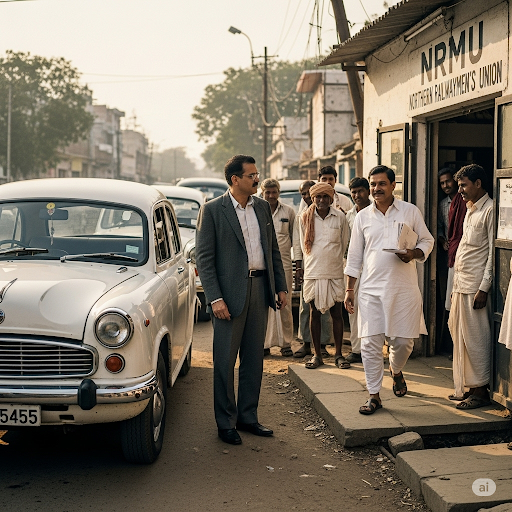
Just then, a message came that the District Magistrate (DM) wanted to talk. When asked where he was, it was said he was parked near the union office. Mishra ji saw it was Yogendra Narayan, the DM — someone he already knew from previous interactions during various labor movements through the Hind Mazdoor Sabha.
Yogendra Narayan was a highly respected officer. In the past, he had supported settlements and negotiations in factories like Floor Mill, Steel Mill, Eveready, and Vikram Mill. Recognizing him, Mishra ji felt hopeful that justice would be done.
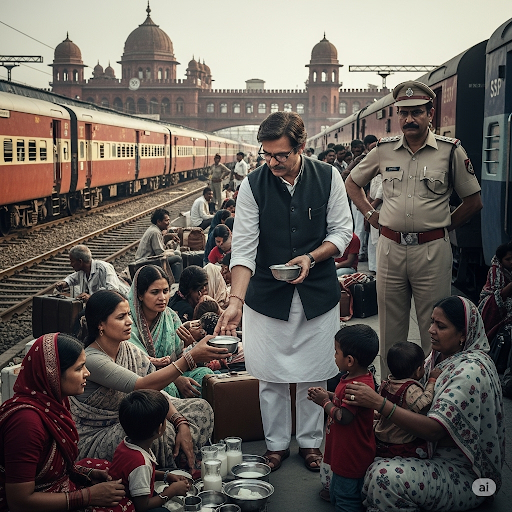
The DM took him to the railway station, where SSP Harikishan Pillai was also present. He said,
“There are children in these stranded trains who haven’t received food or milk. What are you planning to do?”
Mishra ji felt sorry but firmly replied,
“Alright. From now on, all these trains are my responsibility. The children will get food and milk.”
He immediately made arrangements — even proper vegetable meals were served to passengers.
DM house meeting next day
The DM asked, “How long will this go on?”
Mishra ji replied,
“I don’t know yet. A solution might come as our meeting is still ongoing.”
The DM instructed, “Come to my office at 8 AM tomorrow.”
Meanwhile, union members thought the DM had arrested Mishra ji. But when he returned, they asked, “You’ve been released?”
Mishra ji explained everything and confirmed the meeting was scheduled for 8 AM next day.
Next morning, Shiv Gopal Mishra, the Divisional President, and Mandal Mantri went to the DM’s residence to begin talks. The DM said,
“The DRM (NE), Bhaskar, is very stubborn. This entire issue happened because of him. If he wants, he can take action against those who assaulted the staff and publicly acknowledge it — and then the strike can end. But he’s saying unless leaders from Kolkata’s running staff union arrive, there will be no discussion.”
Lucknow Railway Strike Turns Into Fierce Showdown
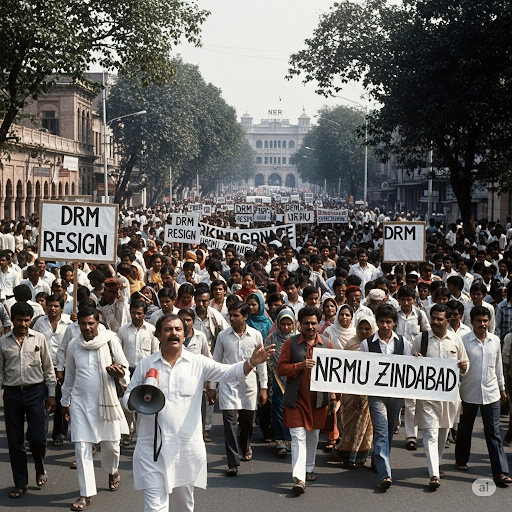
Mishra ji replied:
“We initiated the strike, and we can end it. Let’s organize a procession from Alambagh to the NER Divisional Office to pressure the DRM into making a decision.”
When asked how many people would be there, Mishra ji said,
“About 5,000–7,000 people.”
The DM said, “That’s a lot!”
Mishra ji said, “Work is already stopped — everyone will participate.”
The DM spoke with the SSP in Mishra ji’s presence and gave permission for the rally. He also strictly instructed the RPF not to obstruct the procession. Plainclothes police were deployed for safety. The rally was held peacefully.
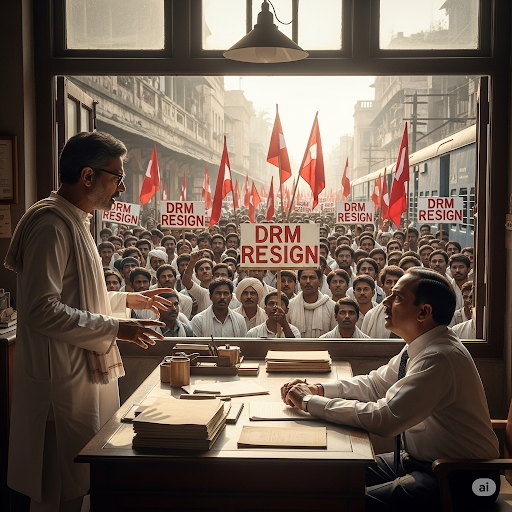
Coincidentally, that very day, Mr. Macdonald took charge as the new DRM (NR, Lucknow). As the protest reached the DRM office, there was a commotion. Prakash Narayan asked, “Who’s creating all this noise?”
People said, “Shiv Gopal Mishra.”
The DRM called him in — he was very fond of Mishra ji.
He asked, “Is this the way to protest? There was an issue over there, and you stopped work here?”
Mishra ji responded,
“When there’s a dead body next door, we don’t cook in our house. Tell me — did we do anything wrong? If our colleagues were wronged and assaulted, shouldn’t we support them?”
Decisive Moment of Lucknow Railway Strike
They then moved to NE Railway. A massive gathering took place. Mishra ji stayed outside to lead the agitation while his colleagues went inside for negotiations.
Later, the DM personally arrived, saying,
“It’s been 8 hours, and no decision has been reached.”
He called in ADM City Mr. Vashisht G and asked Mishra ji to join. The DM said,
“If no decision is made in 30 minutes, we’ll arrest the RPF Commander ourselves.”
As soon as the ADM City conveyed this message at the negotiation site, the decision was made within 20 minutes.
Victory and Legacy of Lucknow Railway Strike
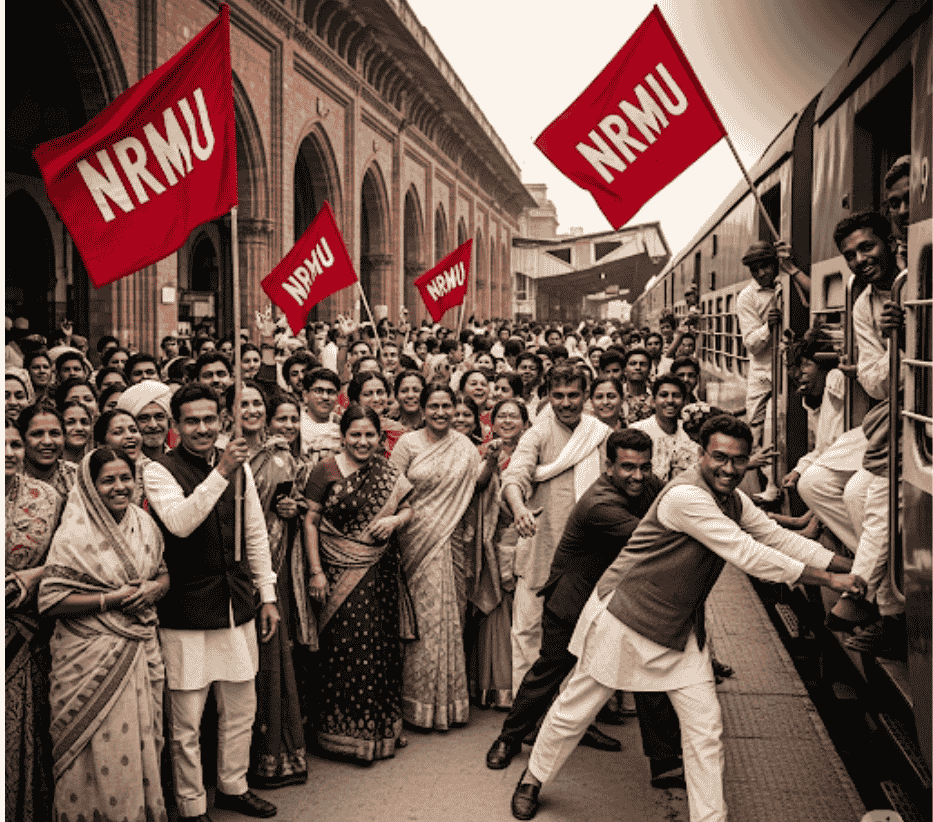
The RPF officer responsible was suspended — a huge success.
On the same day, J.P. Chaubey was in talks with the Government of India, and the first-ever Ex-Gratia Allowance was granted — this happened on 11 November 1979.
Mishra ji informed everyone that even a 15-day bonus had been approved. This made the workers even happier.
That strike taught everyone many lessons. For three days, everything came to a halt. The situation was such that had the protest spread to other zones, the consequences could’ve been severe. Thankfully, a resolution was reached in time.
Our blogs
Divider